
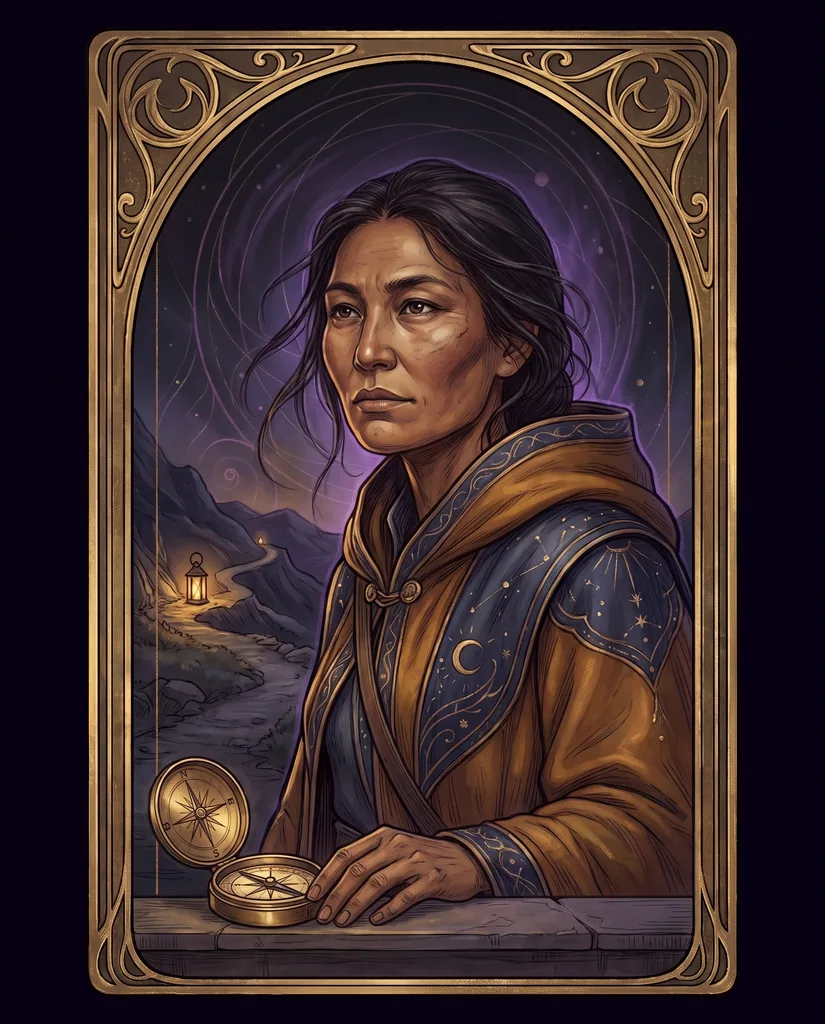
The Pathfinder
Ranger personality type
Most alive off the map, solving it alone.
These are the engine’s matching targets, not a score for any person — the Ranger’s signature targets 82 on Exploration.
You're most alive off the map — self-directed, unsupervised, working it out as the terrain reveals itself. Give you a problem and a wide berth and you'll find a route nobody handed you; you learn by doing, travel light, and move without waiting for permission or a committee. The engine here is independence, not novelty for its own sake — you'll finish what you start, you just insist on doing it your own way. The cost is that you isolate when help would move you faster, under-share the map in your head, and bristle the moment someone tries to manage you.
What is the Ranger personality type?
The Ranger is defined by very high Autonomy and strong Exploration (novelty-seeking), paired with low Relatedness and low Extraversion — they are most alive off the map, solving problems alone, and they act without needing permission or a crowd. Unlike Inventors, Rangers carry enough Conscientiousness to actually execute once they set a direction; independence is the point, not novelty for its own sake.
Top strengths
- Self-reliant and resourceful in unfamiliar territory
- Acts alone without needing permission or a map
- Adapts fast and learns by doing
Blind spots
- Reluctant to ask for help or delegate
- Isolates and under-communicates
- Resists being managed or tied down
Ideal environment
Stress trigger
Communication style
Party role
Subclasses
Goes where the path hasn't been cut.
Novelty and new ground pull you harder than anything familiar.
Travels light and travels alone.
You're at your best self-directed and unattached.
Built to outlast the hard stretch.
When the stretch gets long, you keep doing the unglamorous next thing until it's behind you.
Eyes on the route, reading the terrain.
You range ahead, focused, and bring back what matters.
Level-up quests
- Ask for help on one thing you'd normally solo
- Bring someone along on a 'solo' mission
- Commit to one shared routine for two weeks
Frequently asked questions
What are the Ranger's strengths and blind spots?
Rangers are self-reliant and resourceful in unfamiliar territory — they adapt fast, learn by doing, and find the route that others miss. The real blind spot is that this self-reliance tips into isolation: Rangers are reluctant to ask for help, tend to under-communicate their thinking, and resist being managed or tied to group dependency.
How rare is the Ranger?
The Ranger's pattern — high Autonomy AND high Exploration AND low Relatedness — is a specific combination. Most independent people still seek some connection; the Ranger profile is distinctive for how consistently the preference for self-direction outweighs the pull toward team or social belonging.
What's the difference between the Ranger and the Inventor?
Both score high on Exploration (novelty), but the Ranger's apex trait is Autonomy — they want independence and agency in the field. The Inventor's apex is Imagination/Openness — they want to generate and explore concepts. Rangers also carry more Conscientiousness and Emotional Stability than Inventors: they survive the terrain rather than just imagining new terrain.
Compare the Ranger
The classes people most often weigh the Ranger against — its closest signature neighbors, compared trait by trait with the engine’s real numbers.
Keep exploring
This is a playful interpretation of a trait pattern, for self-reflection — not a clinical diagnosis or a claim that anyone “is” this class. Your real result depends on your own answers.