
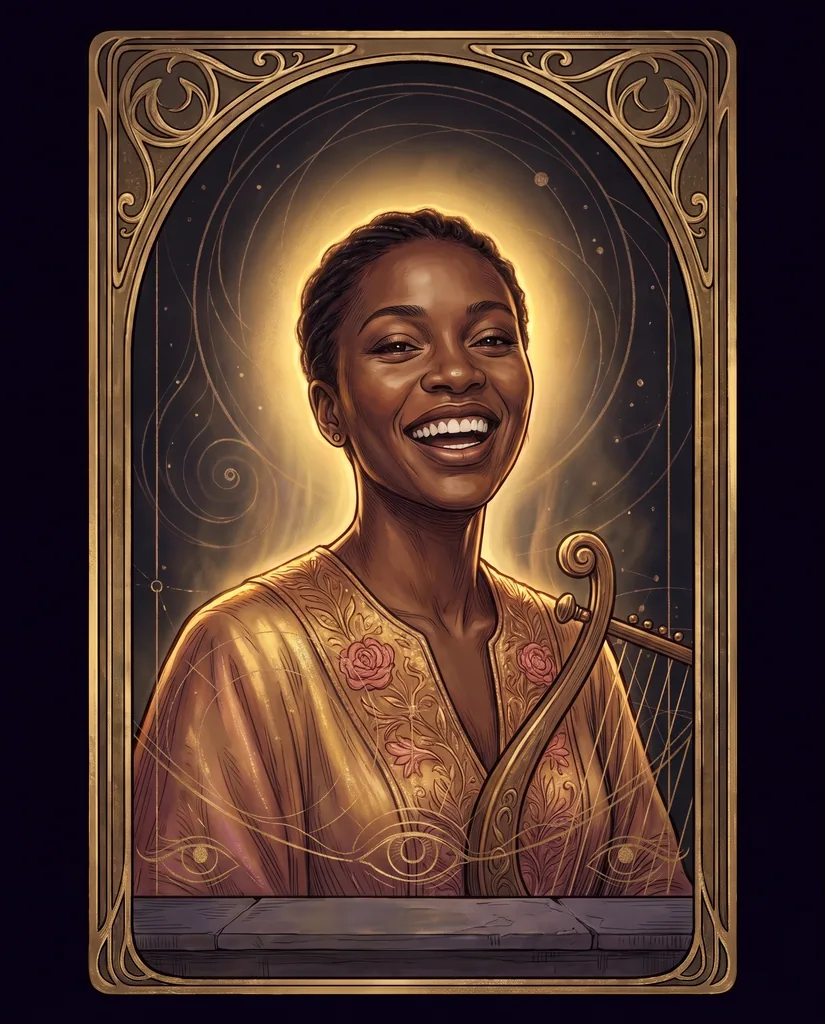
The Luminary
Bard personality type
Lights up the room and makes everyone in it feel seen.
These are the engine’s matching targets, not a score for any person — the Bard’s signature targets 88 on Charisma.
You walk in and the temperature of the room changes. Reading people is almost involuntary for you — who's left out, who needs a laugh, where the energy wants to go — and you spend that read generously, pulling a group into a shared feeling and making individuals feel genuinely seen. For you, warmth is the point, not a tactic; you connect because connection is its own reward. The flip side is that you'll reach for harmony over the hard truth, and a long stretch of solitary, heads-down work can quietly drain you dry.
What is the Bard personality type?
The Bard is a high-Charisma, high-Relatedness pattern: someone who builds warm rapport fast, reads a room instinctively, and energizes people around a shared feeling. They score very high on Extraversion and Relatedness, paired with solid Harmony (Agreeableness) — the combination makes them expressive, genuinely persuasive, and memorable in a way that sticks with people.
Top strengths
- Builds warm rapport fast and reads a room instantly
- Energizes and rallies people around a shared feeling
- Expressive, persuasive, and genuinely memorable
Blind spots
- Can prioritize harmony and applause over hard truths
- Drained by long, solitary, detailed work
- Overcommits socially and spreads thin
Ideal environment
Stress trigger
Communication style
Party role
Subclasses
Most alive with all eyes on you.
The bigger the crowd, the calmer you get — stage nerves just aren't in your wiring.
Connection is the whole point.
You build deep belonging and make people feel they belong.
Turns the moment into a story worth remembering.
Your imagination gives the room a narrative to rally behind.
Charisma with a hand on the wheel.
You don't just lift the room — you point it somewhere.
Level-up quests
- Deliver one piece of hard feedback, kindly but plainly
- Spend a focused hour alone on deep work
- Say no to one commitment to protect your energy
Frequently asked questions
What are the Bard's strengths and blind spots?
Bards can unite a room and rally people around something bigger than themselves — a specific strength that shows up clearly in people-facing, expressive, or leadership-adjacent roles. The real blind spot is prioritizing harmony and social approval over hard truths: Bards tend to absorb positive feedback as a reward signal, and delivering uncomfortable feedback or sustaining long, solitary deep work can be genuinely draining.
How rare is the Bard?
Bards reflect an uncommon peak alignment: very high Extraversion AND very high Relatedness at the same time — the social-energy and warmth traits reinforcing each other at the top of the range. This makes the pattern relatively distinctive, not better or worse than other types.
What's the difference between the Bard and the Merchant?
Both are high-Charisma and confident initiating with anyone, but the core orientation differs. Bards lead with emotion, story, and connection — they want everyone in the room to feel seen and included. Merchants lead with outcomes and leverage — they're reading the exchange and the angle. Bards score higher on Harmony and Relatedness; Merchants score higher on Command and practical competence.
Is the Bard based on real psychology?
The trait dimensions beneath the Bard — Charisma/Extraversion and Relatedness (the social connection motive from Self-Determination Theory, measured alongside Big Five) — are grounded in established psychological research using public-domain IPIP items. The 'Bard' label is original and interpretive; it is not a clinical category, diagnosis, or MBTI analogue.
Compare the Bard
The classes people most often weigh the Bard against — its closest signature neighbors, compared trait by trait with the engine’s real numbers.
Keep exploring
This is a playful interpretation of a trait pattern, for self-reflection — not a clinical diagnosis or a claim that anyone “is” this class. Your real result depends on your own answers.